Dhruv Tayal
@dhruvtayalagency
Project
Trusted AEOtrustedaeo.in
We help brands become most TRUSTED name in their category
Founders who've been here I need your honest advice
Okay so I'm genuinely frustrated right now and I need to hear from people who have actually been through this stage.
I'm building Talvé a professional platform for creative talent. Think LinkedIn but built exclusively for creatives. Musicians, models, photographers, producers, directors, all of them. The problem I'm solving is real. I see it every single day. I literally come across creatives who are facing the exact pain point Talvé was built to fix and I can't reach them properly.
That's the part that's killing me.
I try to post on Reddit and the bots take it down. I post on LinkedIn and Twitter and I'm facing the exact same problem my users face, you post something and get 10 impressions and you're basically talking to yourself. Building a following takes months and I don't have months to wait around hoping an algorithm decides to show my content to the right people.
I move from platform to platform every day trying to figure out where my people actually are and how to reach them and I feel like I'm spinning in circles.
So I want to ask the people who have been here before me.
How did you actually get your first real traction? Not the polished version. The real one. Which platforms worked for you at this stage? What did you do that actually moved the needle when nobody knew you existed yet? Did you go direct? Did you find communities? Did you do something completely unexpected?
Because right now I feel like I'm doing everything and reaching nobody and I could really use perspective from founders who have actually come out the other side of this stage.
What would you do if you were me right now?
The pattern that's worked across a few early-stage products I've seen: skip the broad platforms and go where your exact niche already congregates — for creatives that's usually genre-specific Discords or niche subreddits, not general LinkedIn/Twitter. And instead of posting content, spend a couple weeks just answering real questions people are already asking there before you ever mention Talvé. Slower than a viral post, but it compounds. Have you identified which specific communities your target creatives already hang out in, or is that still the unknown?
Hello Everyone
I’m building in fintech space and highly regulated environments. Wondering as a sole founder how to navigate compliance and licensing and partnerships challenges .Appreciate any thoughts on this
VC backing can unlock some doors, but it doesn't replace the trust artifact question — if anything it raises the bar, because diligence now includes your investor's reputation risk too. Sole-founder + regulated fintech is doable. But the funding conversation usually goes easier once you already have one credible proof point — a pilot, an LOI, even a compliance advisor with a recognizable name attached. If you don't have that yet, I'd chase the proof point before the round — it makes both the VC and the partner conversation shorter. Are you leaning toward raising now, or locking in one pilot/LOI first and using that as leverage?
I'm building the stock market for AI credits. Planting seeds nobody sees from day 0. Text me if you'd like to be a part of it somehow. Still figuring it out. I need a strong network for this. My biggest project yet.
That's the real tension here — "trusted data source for everything" is hard to own from day one, but "the API that's never wrong about which model to use for X" is a genuinely ownable niche. If devs start trusting your picks for one narrow, high-frequency use case, that reputation compounds and expands outward naturally. Trying to be the trusted source for everything at once usually means nobody trusts you for anything specific yet. What's the one use case where your picks are most clearly better than someone just guessing or defaulting to GPT-4/Claude?

I don't know if others here have this problem, but I'm genuinely lost on how to get the first real 100 users for a Chrome extension.
Posted on Reddit. Got 1 upvote. Half the subreddit feels like bots or just people there to promote their own stuff.
Posted a GIF demo, along with a cool presentation and value pitch. Nothing.
The extension is actually useful and I could see it be used by web designers, vibecoders who want to create frontend — it reads any site's design system and sends it to Claude/GPT/Lovable/Manus instantly. Developers who've tried it get it immediately. The problem is getting them to try it at all.
I know the answer is "go where your users are" but the places I've tried feel either dead or pay-to-play.
If you've gotten real traction for a free dev tool, what actually worked? Not looking for "post consistently" — I mean the actual move that got your first 50 real users, and ones that actually stayed and enjoyed the app.
#tool #developertool #chromeextension #saas #marketing
Organic posting and Reddit Ads are actually different games. Organic works when you're solving a pain point people are already discussing unprompted — for UIDrop that's more likely AI-agent / prompt-engineering / design-system subreddits than general startup ones. If organic posts aren't landing, it's often because they read like an announcement instead of a reply to a problem someone just raised in the thread. Paid Reddit Ads can work, but they pay off best once you already know which subreddits convert — otherwise you're paying to discover that. Which subreddits have you tried organically so far?
wrote a comparison of every job description parser API I could find
rchilli, textkernel, affinda, eden ai vs jd intelligence — pricing, jd-specific fields, scoring, self-serve vs sales-gated
tl;dr most "jd parsers" are resume parsers pointed at jd text. the field quality drops a lot.
This kind of side-by-side is exactly the content AI answer engines pull from when someone asks "best JD parser API." Worth checking whether ChatGPT/Perplexity are already citing it. Have you looked at how jdintelligence shows up when buyers ask AI tools for recommendations in this category, or is Google still where most of the traffic comes from right now?
Founder @ DerFit – Helping fashion brands reduce returns through size intelligence | Building in public
Not sure if this is the right platform for this or not, but I'm looking for someone who's able to bring my tool to the market. I have a sizing intelligence tool for online clothing brands that uses Shopify. I've tried different channels and methods to bring the product to customers, but I havent really gain any traction. If someone is experienced or sure in advertising it, hit me up.
I'll evaluate the whole product and I'm willing to work either commission based or shared-revenue.
Been there with early-stage SaaS selling into Shopify brands — usually the channel isn't the bottleneck, proof is. DTC founders are skeptical of new apps until they see a return-rate number from a brand like theirs. Do you have even one pilot store with before/after data? A single case study like that tends to open more doors than any paid channel would at this stage. What's been the harder part so far — getting in front of merchants, or converting once you are?
Most SaaS founders think SEO is dead.
It's not. But the game completely changed.
Your buyer no longer Googles "best [tool category]."
They ask ChatGPT.
They ask Perplexity.
They ask Claude.
And if you're not in the answer — you don't exist.
The question isn't "how do I rank on page 1?"
The question is: "Does AI know enough about my product to recommend it?"
If the answer is no, here's what's usually missing:
→ You're not mentioned in communities where your buyers ask questions
→ You're not cited in third-party content AI trains on
→ Your category positioning isn't consistent across the web
This is fixable.
But most founders are still playing the 2019 SEO game.
Which AI tools are your buyers using to research your category?
Exactly this — Reddit is becoming one of the strongest AEO signals right now. AI models like ChatGPT and Perplexity heavily index Reddit discussions when generating recommendations, so authentic community presence on Reddit directly translates to AI visibility.
What kind of Reddit activity worked for DOOD — were you posting in relevant subreddits, answering questions, or something else? Curious what the actual tactic looked like on your end.
most founders build for months before finding out nobody wanted it.
I almost did the same thing.
before I wrote a single line of code for my current project, I forced myself to answer one question: is there actually demand for this?
turns out that question is harder to answer than it sounds. surveys are biased. asking friends is useless. hiring a research firm costs more than your entire runway.
so I built a way to simulate it instead.
when a complete stranger — someone I've never met, never marketed to — signed up on their own, I knew I was onto something real.
that's the only validation that matters. not compliments. not 'looks cool bro'. a stranger taking action.
if you're pre-launch and still guessing whether your idea has legs — ScaleSim can tell you before you waste months finding out the hard way.
AI-powered market validation in one clean and simple report.
Spaceship
Buy way.ai | Spaceship
Own way.ai today. Secure checkout and guided transfer support. No hidden fees.
This is the right instinct — the moment a complete stranger takes action without you prompting them, that's signal that can't be faked.
The challenge most pre-launch founders have is they solve for demand validation but then forget the next bottleneck: discoverability at scale. Even validated ideas die because nobody finds them when searching or asking AI.
ScaleSim is an interesting angle — market sim as a signal layer. What does your current waitlist look like in terms of the type of founders joining? Curious whether you're seeing more technical or non-technical founders show up.
Still trying to get a little closer to the people we're building for.
I don't know if it's just me, but lately Strivle feels a little quieter than it used to. It's kind of sad because when I first joined, I genuinely believed it could become a place where founders connected, shared what they were building, exchanged ideas, and learned from each other.
I'll definitely keep showing up here. I've met some great founders and received thoughtful feedback along the way. At the same time, I also want to explore more places where MySpec can reach builders who might actually need it.
Today, that place is TinyLaunch. 🚀
If you have a minute, I'd really appreciate your support with an upvote. And if you've already tried MySpec, a short comment or an honest review would mean even more. Every bit of feedback helps us build a better product for founders.
TinyLaunch: tinylaunch.com/launch/15262
Website: myspec.dev
Wishing every founder who made it this far a productive day, and I hope you're one step closer to the people you're building for. 💙
The challenge you're describing — knowing your builder exists but not being able to reach them — is one of the most real frustrations in early-stage SaaS.
What I've noticed with dev tools: the best traction often doesn't come from being on the right platform, it comes from being embedded in the exact conversations your users are already having. GitHub discussions, specific Discord servers, niche Reddit threads where your ICP actually asks questions.
MySpec's positioning ("clarity precedes code") is sharp. The question is: are the places where devs complain about messy handoffs and vague specs already aware of you?
What kind of builders are you finding hardest to reach right now?
Sayona.io - I'm a Product Manager and have to write 50+ slack messages, emails, docs and what not every single day. Tried different voice writing tools, they are either expensive or just very basic. And out my own need built Sayona.
It's currently available as a chrome extension, with the iOS app coming out in 3 months.
Available for Free to try.
Sayona
Sayona: Spoken thoughts, written smart
A voice tool for thinking out loud. Speak naturally and Sayona turns it into clean, ready-to-use writing anywhere you type.
That's actually the right place to be at this stage — figuring out conversion before scaling acquisition saves a lot of wasted spend later.
One thing that moves the needle fast for voice tools: showing real before/after outputs from real users. Social proof on the output quality removes the "will it sound like me" objection better than any copy. Are you collecting user samples yet?
CEO & Founder @ MasterPlan AI - all-in-one platform for paid media professionals. Solo builder.
Any ideas on how to bring users to my SaaS without using paid media?
LinkedIn is the right call for a marketing AI tool — that's where media buyers, growth leads, and marketing managers actually make decisions.
One thing I'd layer in early: make sure MasterPlan is showing up when those buyers ask AI tools about media planning. That category is moving fast and whoever gets cited first in ChatGPT/Perplexity answers builds a compounding advantage.
What stage is MasterPlan at right now — early users, or already generating revenue?
i’m Arush Sharma. 15yo founder and builder obsessed with rapid execution. I don’t wait for solutions. I ship them. currently, I’m working on b2b startups.
People are complaining about your competitors on Reddit right now.
If you aren’t replying in 10 minutes, you're losing the customer.
Compeddit monitors subreddits 24/7, pings your Slack/Telegram on buying signals, and drafts the winning reply for you.
Try it: compeddit-ai.vercel.app
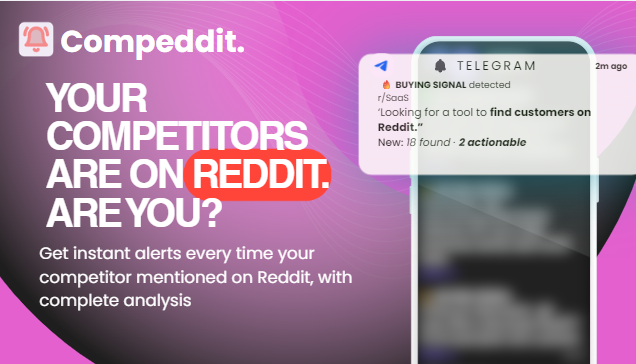
Compeddit
Compeddit — Reddit Competitor Monitor
Monitor Reddit 24/7 for competitor mentions — buying signals, complaints, and comparisons. Get instant Telegram alerts.
The real-time buying signal angle is sharp — most founders only find out competitors are being compared on Reddit days later, when the deal is already gone.
The interesting growth challenge for a tool like this: when SaaS buyers ask AI "how do I monitor my competitors on Reddit", Compeddit needs to be in that answer. Right now most AI tools would name Mention, Brand24, or Brandwatch — tools with years of citations built up.
Who's your ICP right now — B2B SaaS founders specifically, or are you seeing traction from other categories too?
Launched 2 months ago, looking for a Marketing Co-Founder (Equity included) send me email at adam@scalemo.ai
Building AI Marketing Studio ($4.5k rev in 2m). Will be the SalesForce for Salesmans, Figma for Designers, VSCode for Developers, Scalemo.ai for Marketers. (btw Looking for a marketing co-founder (equity included))
scalemo.ai
Scalemo - The AI Marketing OS | Scalemo
Scale your marketing creative production with AI. Generate, test, and optimize ad creatives 10x faster. The all-in-one platform for performance marketers — from brief to published ad in minutes.
$4.5k in 2 months for a tool in a crowded category is genuinely impressive — it means early users found real value fast. The "Figma for marketers" positioning is smart because non-technical buyers immediately get it.
The challenge at this stage is usually the mass market wall — those buyers need to see a tool cited in trusted places before they try it. Are most of your current users coming from direct outreach or organic discovery?
We all had those conversations as kids — "how much would you need to eat that?" That same energy exists in streaming, but donations right now are just... tips. You send money, streamer says thanks, that's it.
I wanted to make every donation actually mean something. So I built Vanity Fair — streamers create challenges, viewers fund them collectively, streamer completes it live and posts proof.
Test mode, can join and enjoy. Need feedback
The core mechanic is genuinely interesting — donation + accountability creates a feedback loop most tip-based platforms don't have. The real growth challenge here is the cold start: streamers won't use it if there's no viewer base, and viewers won't engage if there are no streamers. Which side are you trying to seed first, and what's your plan to get the first 10 streamers actually using it?
15 failed projects taught me one thing nobody says out loud
Everyone tells you to validate your idea. Nobody tells you what that actually means.
I spent years launching things into the void. Built first, validated never. Lost months of my life on ideas that had no real demand. The advice was always the same -- "talk to customers," "validate early" -- but the how was always missing.
What actually works: simulate the market before you touch the product.
Map your real buyer. Define their actual objections. Figure out what price breaks them. What messaging gets through. What competitors already own their attention. Do all of this before you write a single line of code or spend a single dollar.
I got obsessed with this process after failure #15. Built it into a structured system. Now I'm turning it into a service -- ScaleSim -- where I run AI-powered market simulations for founders and give them a full report on whether their idea has real demand.
Pre-launch. Waitlist open now at scalesim-waitlist.netlify.app
Curious if anyone here has a validation process that's actually worked for them.
Joined the waitlist✌️25%
nah trash idea🥀75%
4 votes
The "how" being missing is the real gap — most founder advice is frameworks without execution context. Simulating buyer behavior before building is smart because it forces you to define who you're actually selling to, not who you think will buy.
Curious about ScaleSim — when you say AI-powered market simulation, are you modeling demand signal from real data sources or generating synthetic buyer personas? The use case makes sense, but that distinction matters a lot for whether the output actually predicts real conversion.
I'm the founder of JD2CV. I love to build real time problem solving SaaS. If you are in the same boat, let's connect and grow.
I spent the last few weeks reviewing 200+ startups from a sub reddit.
Some were genuinely great.
Many will unfortunately fail.
Not because of the product.
Because of these patterns:
- Building before talking to users
- Solving a problem nobody pays for
- No distribution plan
- Spending months polishing instead of shipping
- Relying entirely on AI-generated content for growth
- Thinking Product Hunt will bring customers
The best founders I saw were boring.
They talked to users.
They shipped fast.
They sold relentlessly.
I learned this the hard way myself while building jd2cv.uk, an AI tool that tailors resumes to job descriptions. My first instinct was to keep adding features.
Users didn't care.
What moved the needle was talking to job seekers, watching them use the product, and fixing the problems they actually complained about.
The biggest lesson from reviewing 200+ startups:
Founders massively overestimate the importance of features and underestimate the importance of talking to users.
What's your startup, and what's the biggest challenge you're facing right now?
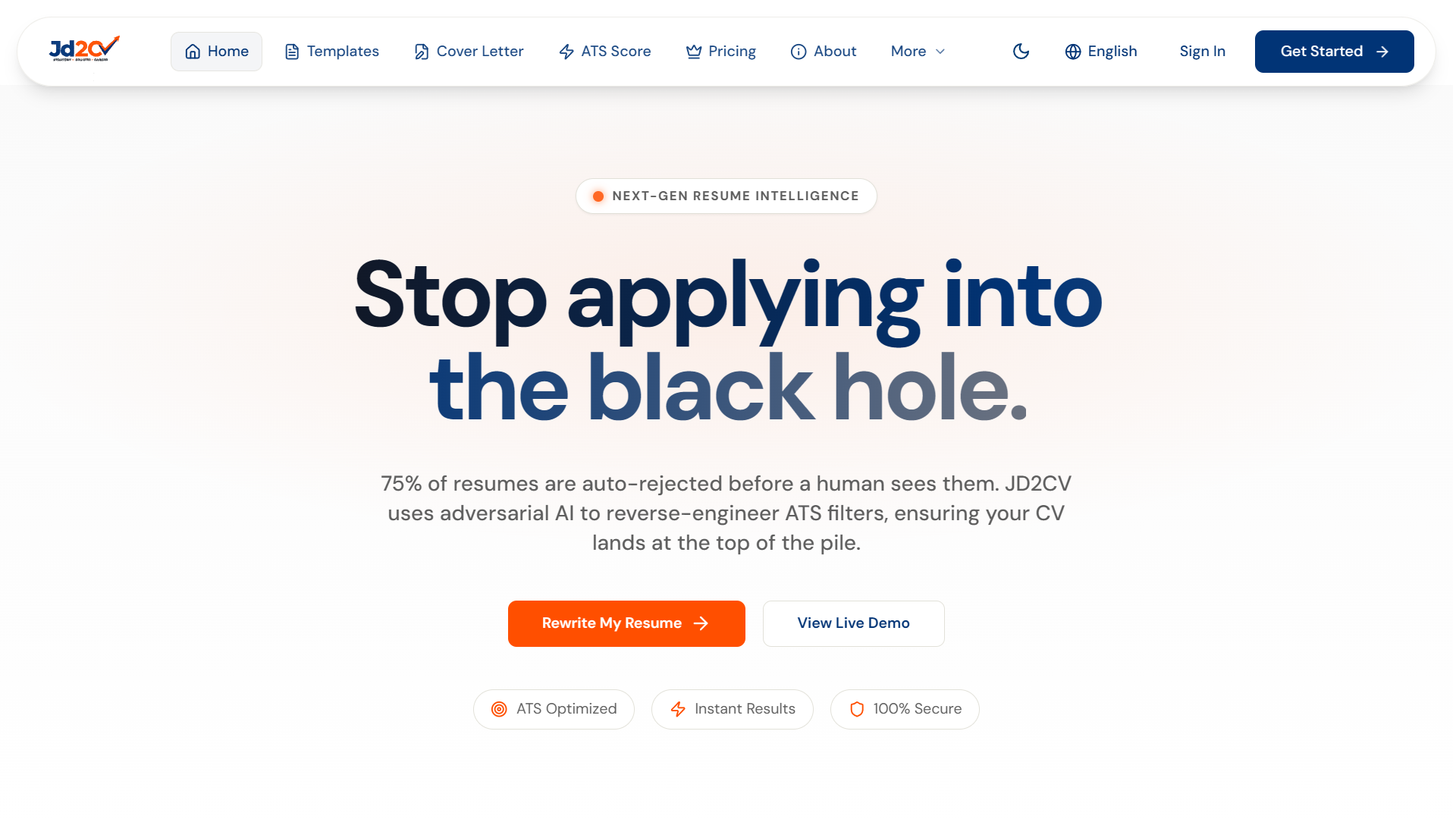
jd2cv.uk
Free AI Resume Builder for Freshers & Job Seekers | JD2CV
Build ATS-optimized resumes instantly with JD2CV. Free AI resume builder for students, freshers & professionals. Download PDF instantly.
This pattern is consistent with what I see working with SaaS founders too. The "no distribution plan" failure is the one I'd add most weight to — because even good products with real users struggle when they can't reach new ones at scale.
What's interesting is that "relying entirely on AI-generated content" is on your list. I'd argue it's not about AI vs. human — it's about whether the content answers real buyer questions or just fills content calendars. The best distribution I've seen for a resume/JD tool is showing up in communities where the frustration lives, not where the product category lives.
What was the most surprising thing you found among the startups that were actually doing well?
CEO & Founder @ MasterPlan AI - all-in-one platform for paid media professionals. Solo builder.
Any ideas on how to bring users to my SaaS without using paid media?
LinkedIn is a solid starting point for a paid media SaaS — decision-makers are very active there. The key is not to just post content but to find posts where your ICP is already discussing paid media pain points and contribute genuinely. What does your ICP look like — are you targeting marketing managers, agency owners, or brand-side media buyers? That changes the LinkedIn strategy significantly.
What to post today?
any product here making money and want a feedback over their product
drop product link below
Bridging ideas to funding is a smart gap to fill — the hardest part is usually getting the founders to trust a new platform over direct investor relationships. How are you building that trust layer right now? And are you focusing on pre-seed/idea stage or post-MVP?
Founders who've been here I need your honest advice
Okay so I'm genuinely frustrated right now and I need to hear from people who have actually been through this stage.
I'm building Talvé a professional platform for creative talent. Think LinkedIn but built exclusively for creatives. Musicians, models, photographers, producers, directors, all of them. The problem I'm solving is real. I see it every single day. I literally come across creatives who are facing the exact pain point Talvé was built to fix and I can't reach them properly.
That's the part that's killing me.
I try to post on Reddit and the bots take it down. I post on LinkedIn and Twitter and I'm facing the exact same problem my users face, you post something and get 10 impressions and you're basically talking to yourself. Building a following takes months and I don't have months to wait around hoping an algorithm decides to show my content to the right people.
I move from platform to platform every day trying to figure out where my people actually are and how to reach them and I feel like I'm spinning in circles.
So I want to ask the people who have been here before me.
How did you actually get your first real traction? Not the polished version. The real one. Which platforms worked for you at this stage? What did you do that actually moved the needle when nobody knew you existed yet? Did you go direct? Did you find communities? Did you do something completely unexpected?
Because right now I feel like I'm doing everything and reaching nobody and I could really use perspective from founders who have actually come out the other side of this stage.
What would you do if you were me right now?
What you're describing is one of the most common and honest frustrations in early-stage building — and it deserves a real answer, not just "post more content."
Here's what I've seen actually work at your stage:
The platform-hopping problem you're experiencing usually comes from trying to build an audience before you have product-market fit signal. At this point, the goal isn't reach — it's depth.
For a platform like Talvé where trust between creatives and brands is everything, the first 50-100 users should come from direct conversations, not content. Find communities where creatives already hang out — specific subreddits, Discord servers for photographers, musician forums — and genuinely participate before you ever mention your product.
Algorithm problems go away when you stop needing algorithms. DM 10 creatives a day. Ask what frustrates them about getting discovered. You'll get users AND product insight at the same time.
The visibility challenge you'll face long-term is that "LinkedIn for creatives" is a positioning battle. Your growth strategy needs to answer: why would a brand discover talent on Talvé instead of Instagram or Dribbble? That answer becomes your marketing message.
What stage are you at right now — do you have any early users on the platform yet?
Shipped: bulk JD generation for HR teams managing 50+ open reqs at once.
One API call, structured output for every role — no more copy-pasting templates and tweaking by hand. Built for enterprise HR.
Bulk JD generation for enterprise HR is a real pain point — this solves a genuinely tedious workflow. The trust challenge you'll face: HR teams are cautious about AI-generated content that goes out under their brand. How are you building trust with procurement/HR leads who need to justify this to their managers? That's the conversion gate for B2B SaaS in this space.
Hey everyone 👋
I've been building SEO Fragments, an all-in-one platform for SEO, AI visibility, content marketing, SaaS growth, and organic traffic.
Right now it includes 117+ tools covering keyword research, content generation, technical SEO, AI citations, GEO, AEO, rank tracking, parasite SEO, competitor analysis, YouTube SEO, eCommerce SEO, and more.
I originally built it to solve problems I kept running into myself, and it has slowly grown into something that marketers, founders, agencies, bloggers, and SaaS builders can use every day.
I'd genuinely love some honest feedback from people here.
Give it a try and let me know what you think — good, bad, or brutal. 😄
Always open to suggestions on what should be added next.
117+ SEO tools in one platform is a massive build — respect. The challenge with all-in-one tools is usually the same: people trust specialists more than generalists, especially in SEO. How are you positioning this against tools like Ahrefs or Semrush? That trust gap is usually the biggest conversion blocker. Would love to hear more about the angle.
We all had those conversations as kids — "how much would you need to eat that?" That same energy exists in streaming, but donations right now are just... tips. You send money, streamer says thanks, that's it.
I wanted to make every donation actually mean something. So I built Vanity Fair — streamers create challenges, viewers fund them collectively, streamer completes it live and posts proof.
Test mode, can join and enjoy. Need feedback
The challenge + streamer combo is a clever growth loop — viral by design. The hardest part is usually making the first set of streamers trust the platform enough to promote it. Have you thought about how you'll position this to get that initial creator buy-in? That's usually where these platforms win or lose early.

Founder-ish.
Hi! Good to see this platform growing as always. I had shared this earlier in the Strivle days, but I’ve since shipped a more complete version with a landing page and public release.
I built a desktop snipping tool that turns screenshots into structured AI input instead of static images. After taking a snip, it runs OCR to extract text and opens an action layer where you can send the context to a local model or external APIs like OpenAI, Claude, or Gemini.
The goal is to close the gap between seeing something on your screen and being able to immediately reason or act on it. I’ve also been experimenting with scrolling capture, screen recording, and step-by-step workflow documentation that can export into structured files with screenshots and actions.
It’s still early, but I’d love feedback from anyone interested in this kind of workflow or building tools around it.
heres the link: snipagent.app
This is smart — AI-generated documentation with screenshots is exactly what SaaS teams hate doing manually. The big question for you is: are you going after dev teams or non-technical PMs? Because the positioning changes a lot. Happy to give feedback on how you're framing this if you want a second opinion.

cyber-security grad now indie developer
Just shipped tryswatch.com
Started as a tool to lock in colour palettes for design systems and turned into its own project. I wanted something easy to fine-tune, with WCAG AA contrast checking built in and clean export to PNG, SVG, CSS, Tailwind, JSON and .ase.
Would love some feedback :)
The use case that would unlock this for me — SaaS landing pages. Founders constantly struggle picking colors that feel "trustworthy" vs "playful." A palette generator with brand personality tags would be gold. Are you thinking about any specific niche to go after first?
cyber-security grad now indie developer
Just shipped tryswatch.com
Started as a tool to lock in colour palettes for design systems and turned into its own project. I wanted something easy to fine-tune, with WCAG AA contrast checking built in and clean export to PNG, SVG, CSS, Tailwind, JSON and .ase.
Would love some feedback :)
website looks great man, but i am not from design background
can you tell me the usecase?
Sayona.io - I'm a Product Manager and have to write 50+ slack messages, emails, docs and what not every single day. Tried different voice writing tools, they are either expensive or just very basic. And out my own need built Sayona.
It's currently available as a chrome extension, with the iOS app coming out in 3 months.
Available for Free to try.
Sayona
Sayona: Spoken thoughts, written smart
A voice tool for thinking out loud. Speak naturally and Sayona turns it into clean, ready-to-use writing anywhere you type.
this sounds someything like whisper flow
CEO & Founder @ MasterPlan AI - all-in-one platform for paid media professionals. Solo builder.
Any ideas on how to bring users to my SaaS without using paid media?
Use reddit

Cyber threats have no secrets. Ship fast solving complex problem in a simple way.
my two cents on being a successful founder in 2026 :
- browse reddit channels
- spot pain & issues posts
- evaluate the numbers, metrics, market
- ship a small feature and reach out
- get feedback and iterate
perfect choice jean
Guyyysss, I think I’m officially exhausted from marketing 😭. Over the past few weeks, I’ve tried pretty much everything I could think of. Posted on LinkedIn. Posted on Instagram. Posted on TikTok.
Result? Lots of impressions. Almost no users.
Tried Reddit. Banned.
Tried Hacker News. Flagged.
At some point it starts feeling less like marketing and more like getting rejected by the entire internet 💀. The frustrating part is that I genuinely believe the product solves a real problem. It basically checks suspicious websites, emails, phone numbers, and crypto wallets and helps identify potential scam or risk signals before people trust them. The idea came from seeing how difficult it has become to tell what's legitimate online anymore.
A website can look professional.
An email can look convincing.
A wallet can seem completely normal.
And people have no easy way to check. So that's what I've been working on. Ironically, creating it felt easier than getting people to notice it 😭. For now, I've honestly stopped marketing for a bit. Not because I want to quit, Just because constantly posting, launching, getting ignored, getting flagged, getting banned, and repeating the cycle is mentally exhausting.
If you've been through this stage before, I'd genuinely love to hear how you got past it. And would love to hear some genuine advices from you guys!
okk how its gonna help user exactly?
Creating high ticket construction ad campaign creatives literally just from a before and after image of the actual project.
The actual photos need to be perserved, the project needs to be advertised as the real thing, UGC style works really well with this format.
Haven't seen anyone else really doing this, trying to figure out meta business suite and google ads so I can actually run these types of vids and get some metrics to back it up.
Have a few different agents in the background constantly ensuring background or actual images are being baked into videos correctly so it can't be claimed as false advertising :)
0:00 / 0:00
video quality is really good
Shipping Kit.club: AI-guided skincare discovery, shaped by real people.
Just shipped the first version of Kit.club, a skincare discovery site that combines AI-guided product discovery with community context and real peer usage. Would love other founders to poke around, roast what’s rough, and tell me what you’d build or fix next.
cool ... making any money out of this?

Any features/updates you'd like to see on Strivle?
video call area with rooms - where people can join and build connection
We officially launched today with our lifetime deals for first 100 users and made 300$ from just 3 clients on day 1. It’s literally unbelievable we never thought that it’ll perform this well, but people are really liking the product and are willing to pay for the service.
For the context: I built poko.video, an AI tool to create motion graphics demo video for SaaS. You just need to drop your repo/url/pdf/ppt and it’ll just build a motion ready video.
hey just visited your saas website - product sounds really cool
I need GTM help - anyone cracked the code on where to start?
understood - lets help you with this product gtm
dm me
Guyyysss, I think I’m officially exhausted from marketing 😭. Over the past few weeks, I’ve tried pretty much everything I could think of. Posted on LinkedIn. Posted on Instagram. Posted on TikTok.
Result? Lots of impressions. Almost no users.
Tried Reddit. Banned.
Tried Hacker News. Flagged.
At some point it starts feeling less like marketing and more like getting rejected by the entire internet 💀. The frustrating part is that I genuinely believe the product solves a real problem. It basically checks suspicious websites, emails, phone numbers, and crypto wallets and helps identify potential scam or risk signals before people trust them. The idea came from seeing how difficult it has become to tell what's legitimate online anymore.
A website can look professional.
An email can look convincing.
A wallet can seem completely normal.
And people have no easy way to check. So that's what I've been working on. Ironically, creating it felt easier than getting people to notice it 😭. For now, I've honestly stopped marketing for a bit. Not because I want to quit, Just because constantly posting, launching, getting ignored, getting flagged, getting banned, and repeating the cycle is mentally exhausting.
If you've been through this stage before, I'd genuinely love to hear how you got past it. And would love to hear some genuine advices from you guys!
Hey, I genuinely believe this product has a lot of potential
As a content creator myself, I've built an audience of 37K+ followers on Instagram, and I'm currently using Super Profile for many of these use cases
Looking at your product I can see a lot of strengths and some unique things you're doing well
At the same time, I think there's a lot of room for improvement in terms of positioning, distribution, and overall growth strategy - I already have quite a few ideas on how this could be marketed and scaled much more effectively
This is a problem I personally relate to, which is why the product caught my attention in the first place - I genuinely feel this could become something much bigger than it is today
If you're open to it, feel free to DM me. We can chat on WhatsApp, Google Meet, or wherever works best and exchange ideas on how to grow this further
Shipped Flowton, a sci-fi time tracking tool. Avail on iOS - apps.apple.com/us/app/flowton-focus-break-timer…

App Store
Flowton: Focus + Break Timer App - App Store
Download Flowton: Focus + Break Timer by Flowton LLC on the App Store. See screenshots, ratings and reviews, user tips, and more apps like Flowton: Focus +…
app interface is cool btw
Shipped Flowton, a sci-fi time tracking tool. Avail on iOS - apps.apple.com/us/app/flowton-focus-break-timer…
App Store
Flowton: Focus + Break Timer App - App Store
Download Flowton: Focus + Break Timer by Flowton LLC on the App Store. See screenshots, ratings and reviews, user tips, and more apps like Flowton: Focus +…
i checked out the app... and i have a question. - how are you getting paid user to this?
I built Biztack, a free business toolkit for Retailers and Entrepreneurs. It currently have two products InvoiceNG and RetailNG.
Check it out: biztack.com.ng
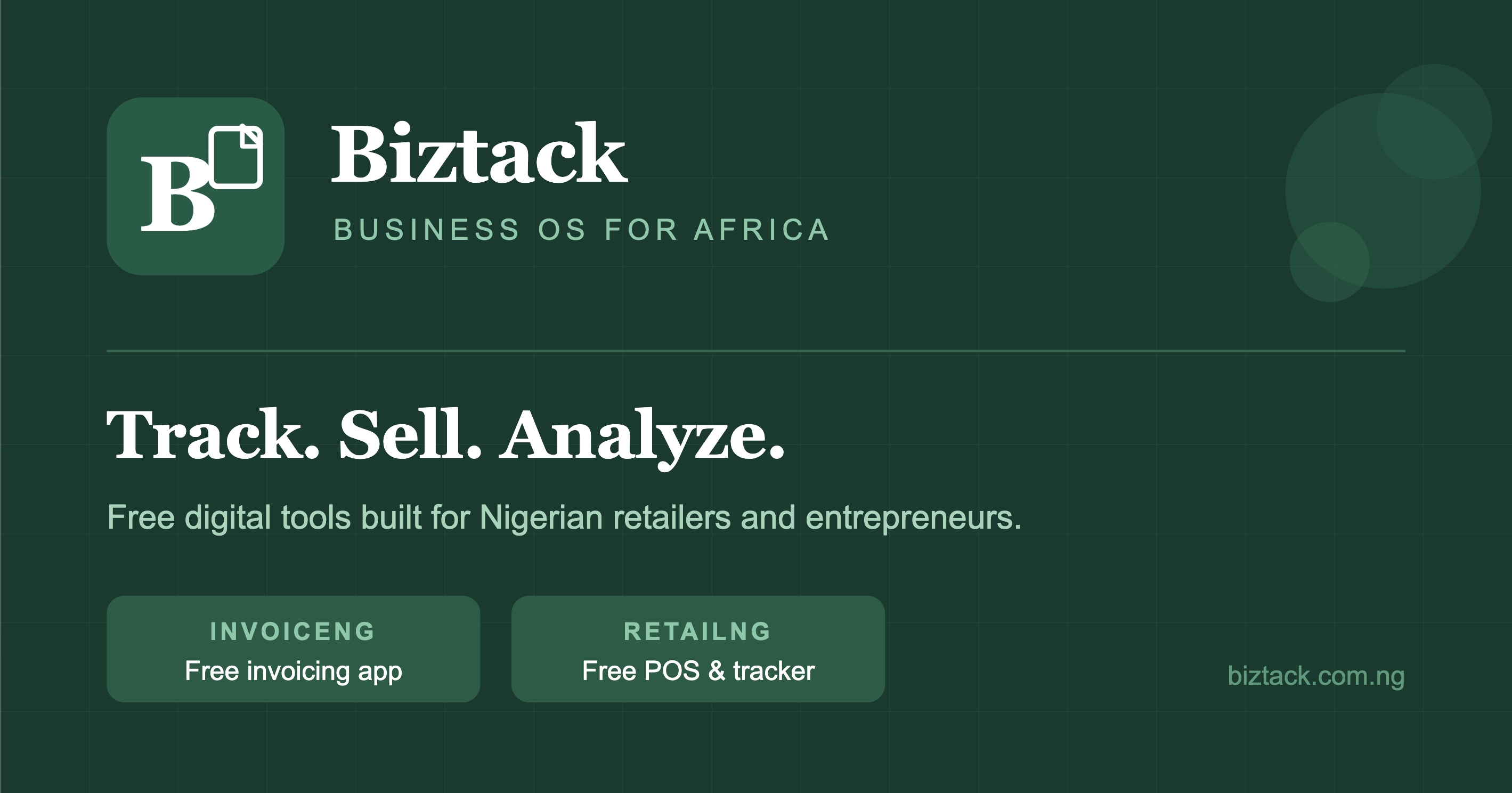
Biztack
Biztack — The Business Operating System For African Entrepreneurs.
Professional invoices, instant sales tracking — all from your phone, free. No download, works offline.
Okay then, what's the future you're looking at when it comes time to get paid users?